
Fabulously Filling Fish Cakes
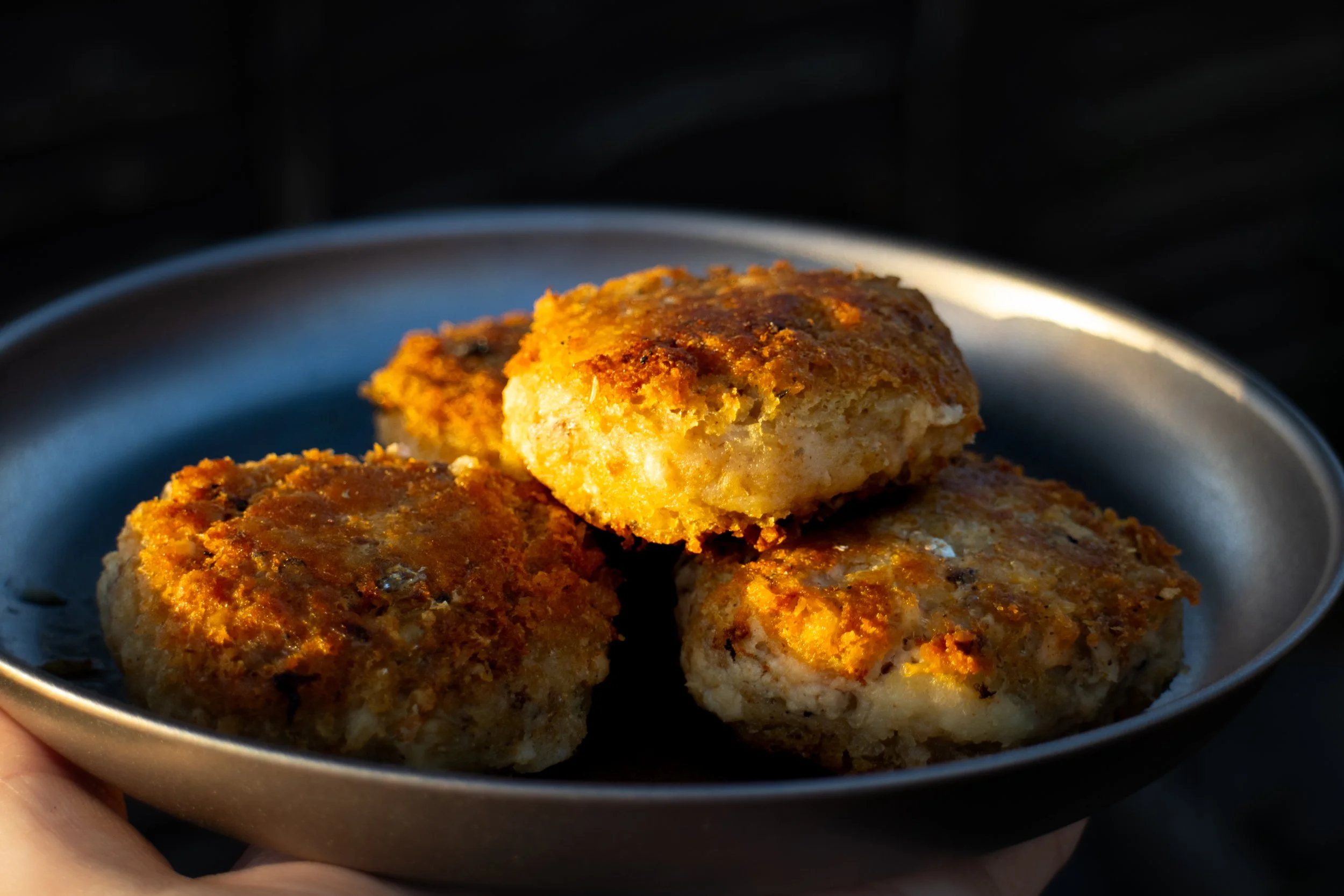
A fish cake is one of the staple offerings of a British fish and chip shop, and after a long day of hard paddling the restorative effects of a piping hot fish cake cannot be understated. They are best served hot and so are also a very sociable food as you can only get one or two in the pan at a time, so everyone stands around the fire awaiting their precious tasty morsels. Be warned these are relatively simple to make, but success lies in the consistency of the mixture. It is well worth giving these a go at home and getting your eye in before trying for the first time on the trial, as it is possible to make a soggy, oily, wet mush if you get it wrong.
Ingredients
All ingredients are given to serve 2 people.
As with most of our recipes there are a few core ingredients and some optional extras you can swap out, depending on what you can get your hands on, or what your specific tastes are.
Core ingredients
The core ingredients for this recipe form a stable base which you can flavour to your taste (or with whatever you have available).
1 x 80g pack of dehydrated potato flake (Smash) - This is a relatively inexpensive product that is lightweight, full of carbohydrates, and takes up little to no room.
200g tinned flaky fish - We have had great success with both tuna and salmon, but found that fish in spring water works much better than the options you get in oil. It is also sometimes possible to find fish in packets, which can reduce the weight of this meal even further.
1 x tablespoon plain flour - This is for rolling and more can be used to stiffen the mixture if needed.
2 x tablespoons vegetable oil - Any high temperature cooking oil can be used.
Optional Ingredients
Now this is where you can start experimenting. Here are the extras we have found work well, so we then add the following to the core ingredients:
1 x teaspoon Old Bay seasoning - This spice mix works well with fish and gives a little kick.
1 x teaspoon black pepper - We have found that fresh cracked black pepper goes well.
1 x small handful fresh wild garlic - IF you can identify this flavoursome plant, and you like the taste of garlic, then this can be a good addition for you.
1 x fresh fish - If it is legal to do so, and you have the skills and equipment with you then there is always the possibility of substituting the tinned fish with fresh fish. If you do this then adding a little egg powder to the mixture can assist with helping it bind together.
Cooking equipment
This recipe does not use many bits of equipment, however you can get into a sticky, floury mess if you are not careful, so it is well worth making sure you have some hand washing methods available.
Camping stove - Something that has a controllable heat is preferable. Although possible over a spirit burner, it is a bit more of a challenge to not weld food to the bottom of the frying pan.
1x frying pan - Big enough to get at least two fish cakes in is recommended.
1 x fish slice (AKA Flippy boy) - We tend to carry a cheap full size plastic fish slice (that we have legitimately used for almost 10 years, because we found that short “camp” ones were useless in comparison).
1 x pan or mixing bowl - Big enough to mix all the ingredients in, and get your hands in to shape the cakes.
1x mixing spoon - We tend to use a flat ended wooden spoon.
2x bowls or plates - Something you can eat out of.
1x tin opener - If you are taking a tin of fish then it is going to make your life significantly easier if you have a method of getting into it!
Method
We are not going to hide it, for this one there you will need to go by your feel of the mixture. If you make it too wet it will stick to your pan and not cook, make it too dry and they will just fall apart. This one took us a few tries at home to get the feel of it, but we can now successfully knock these tasty morsels together with ease.
Take the “mixing” pan and drain the liquid from the tinned fish into the pan. We do this to keep the nutrients from the liquid, and to reduce both the amount of food smelling waste and extra water needed.
Add the potato flake and mix to rehydrate. Then add more water bit by bit till the potato flake is just about rehydrated. The amount of liquid recommended in the packet instructions will likely be too much, as you want a slightly stiffer consistency than if you were eating it as mashed potato, and there will undoubtedly be a little more water still in with the drained fish.
Add the drained fish to the potato mix.
Add any seasoning, spices, herbs etc. and mix it all together.
Using floured hands, form balls that are about 4-5 cm across and flatten into pucks about 1.5 cm thick.
If the mixture is too wet and remains sticky, add a little flour and try again.
Heat up your frying pan to a medium heat and add a tablespoon of oil. The fish cakes should make quiet frying sounds when added. Too cold and the fish cake will absorb the oil, too hot and the fish cake will burn on the outside (but still be ‘raw’ on the inside).
Fry for around 3 to 4 minutes on each side until crispy and hot all the way through.
Serve and enjoy!
Trail tips
We tend to make up all the fish cake pucks before starting frying. This means that all the messy bits are done in one go, and then the person frying can add further fish cakes without getting their hands covered in mixture.
Make sure there is a layer of oil at the bottom of your pan to begin with, and add small amounts when needed in the frying process.

Our first attempt at fish cakes on a fire. We’ve got better at cooking them, but only because they tasted so good that first time!